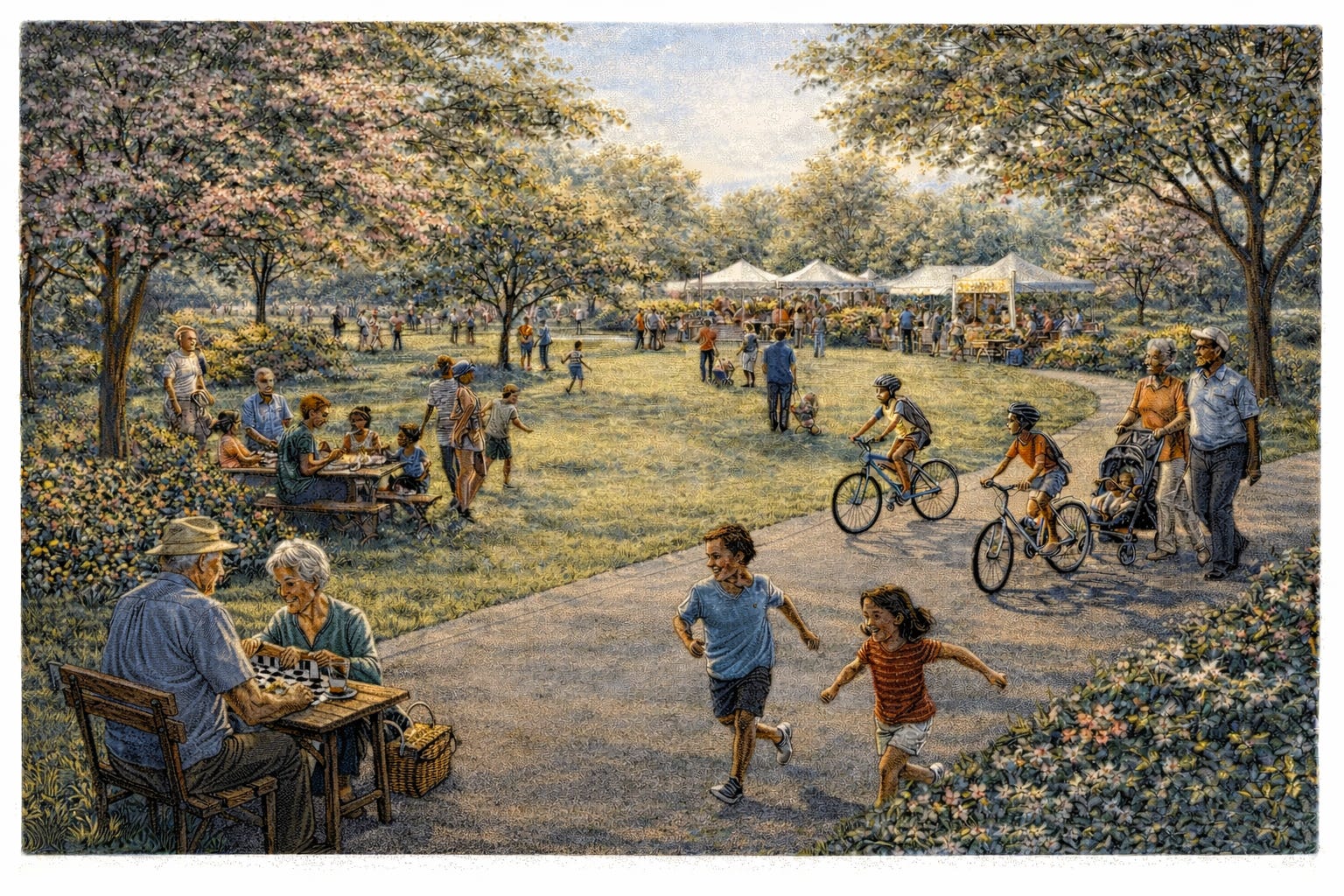
The Distance Between Neighbors
Because housing matters.

The distance between neighbors is not measured only in feet or property lines. It is measured in daily encounters that never happen, in conversations replaced by car doors closing, in lives lived side by side but never together. Over time, that distance becomes normalized. We stop noticing it. We begin to mistake separation for privacy, isolation for stability, and sameness for safety.
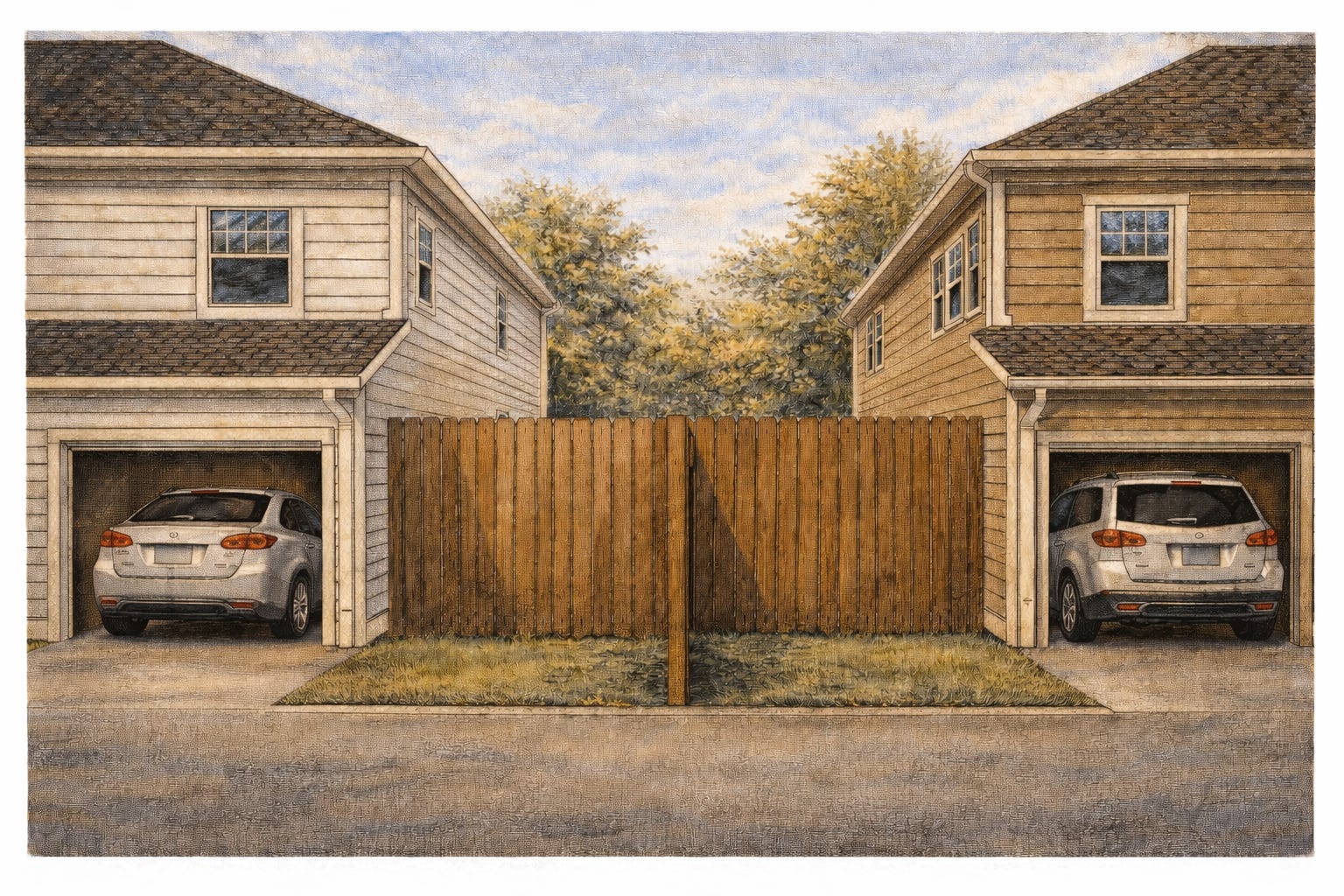
Housing plays a quiet but decisive role in creating that distance. Not just through who can afford to live where, but through how our neighborhoods are designed to function, or not to function, as shared places. When housing limits proximity, it limits understanding. When it narrows who belongs, it reshapes community itself. And when these patterns persist long enough, they stop feeling like choices at all.
Community Requires Honesty—Especially About Housing
Community is not accidental. It does not emerge simply because people live near one another, nor can it endure without intention. At its core, community is built on shared responsibility, mutual visibility, and a willingness to negotiate difference. Housing, where it is built, who it is built for, and who it excludes, is one of the most powerful forces shaping whether community can truly exist.
Yet housing is also where many of our deepest, least examined biases reside.
For decades, exclusionary zoning has been framed as neutral, technical, even protective. Single-family zoning, large minimum lot sizes, parking requirements, and rigid use separations are often defended as preserving “neighborhood character” or “quality of life.” These phrases feel benign. Familiar. Comfortable. Because they are familiar, they are rarely interrogated.
But comfort should not be confused with fairness.
Most Americans did not consciously choose exclusionary zoning. We inherited it. It became the default backdrop of our lives: subdivisions separated from jobs, schools isolated from homes, daily life structured around cars rather than people. Over time, these patterns stopped feeling like choices at all. They became “just how things are.”
And that is precisely the problem.
When a system is deeply embedded, it becomes invisible. We stop questioning whether it aligns with our stated values. We stop noticing the contradictions between what we say we believe about opportunity, fairness, community and what our housing policies actually produce.
Exclusionary zoning limits who can live where, but more importantly, it limits who we encounter. It narrows our daily interactions to people who look like us, earn like us, live like us. That homogeneity is often mistaken for stability. In reality, it is fragility.
Communities that cannot adapt, welcome, or evolve eventually hollow out, socially, economically, and culturally.
What makes this especially difficult is that many people’s lived experiences quietly contradict the policies they now defend. We know, often personally, that shared housing can work. We have lived in apartments, duplexes, boarding houses, dorms, accessory units. We have benefited from density when we were younger, poorer, older, or in transition. We have relied on proximity to jobs, transit, childcare, and neighbors during vulnerable moments in our lives.
And yet, once stability is achieved, the ladder is too often pulled up.
This is not usually driven by malice. It is driven by fear. Fear of change, of loss, of perceived risk. It is driven by narratives that conflate exclusivity with safety and scarcity with value. These narratives persist not because they are true, but because they are rarely challenged openly and honestly.
Addressing this requires more than policy reform. It requires collective self-examination.
We must be willing to ask uncomfortable questions:
Why does new housing feel threatening?
What assumptions are we making about the people who might live there?
Whose comfort are we prioritizing and whose needs are we ignoring?
Community cannot be built on avoidance. It requires proximity. It requires a mix of incomes, ages, household types, and life stages. It requires housing choices that reflect real human lives, not idealized snapshots of permanence.
Speaking openly about where we have come from matters because it reveals that exclusion was not inevitable—it was designed. Speaking honestly about where we want to go matters because it forces us to align our housing policies with our values rather than our fears.
If we want communities that are resilient, vibrant, and humane, we cannot continue to treat exclusionary zoning as untouchable tradition. We must see it for what it is: a system that no longer serves the realities we face or the future we claim to want.
Community begins where denial ends. Housing is where that conversation must start.
The Space Between Us
The distance created by exclusionary housing does not announce itself. It accumulates quietly, through design decisions that stretch daily life apart. When homes are separated from schools, from shops, from workplaces, and from one another, interaction becomes optional and eventually rare.
Neighbors become abstractions rather than people.
Difference becomes unfamiliar.
Empathy becomes harder.
Over time, this distance shapes behavior. It encourages suspicion of change rather than curiosity. It makes it easier to believe that newcomers are disruptions rather than contributors. When people are rarely seen, it becomes easier to misunderstand them and easier still to fear them.
This is how physical separation becomes social distance. And social distance, left unexamined, hardens into policy.
From Distance to Responsibility
If we accept that exclusionary housing patterns are learned rather than inevitable, the next question becomes practical: what does this mean for everyday people, not planners, not developers, not policy experts, but residents who care about their community?
The answer is both simpler and harder than it sounds.
Enhancing community through housing does not require everyone to become a zoning expert. It requires a shift in how we evaluate proposals, conversations, and tradeoffs. Too often, public debate is framed around whether change should happen at all, rather than whether a specific change moves us closer to the kind of community we say we want.
The first step is reframing what “protecting a neighborhood” actually means. Protection should not be synonymous with freezing a place in time. Neighborhoods that are truly healthy are not static; they adapt. They absorb new residents, new needs, and new ideas without losing their identity. Housing that enhances community is housing that allows teachers, service workers, young adults, caregivers, and seniors to remain part of daily life, not housing that quietly pushes them farther and farther away.
For everyday residents, this means evaluating housing proposals based on outcomes rather than aesthetics or instinctive reactions. Instead of asking, “Does this look like what’s already here?” a more useful question is, “Who does this allow to live here and who does it exclude?” Instead of asking, “Will this change traffic or parking?” it is worth asking, “What happens if we continue forcing every household into a car-dependent pattern with no alternatives?”
Advocacy begins when people recognize that stasis is not neutral. Maintaining the status quo in a growing or changing region is itself a choice; one that usually results in higher costs, longer commutes, increased displacement, and weakened social ties. Expecting different outcomes while repeating the same land-use patterns is not caution; it is avoidance.
Everyday advocacy also means speaking up earlier and more constructively. Too often, the loudest voices appear only when a specific project feels threatening. By that point, conversations are reactive and polarized. A healthier approach is for residents to articulate, in advance, the kinds of housing they do support: small-scale infill, duplexes and quadplexes, accessory dwelling units, townhomes, courtyard housing; forms that add people without overwhelming place.
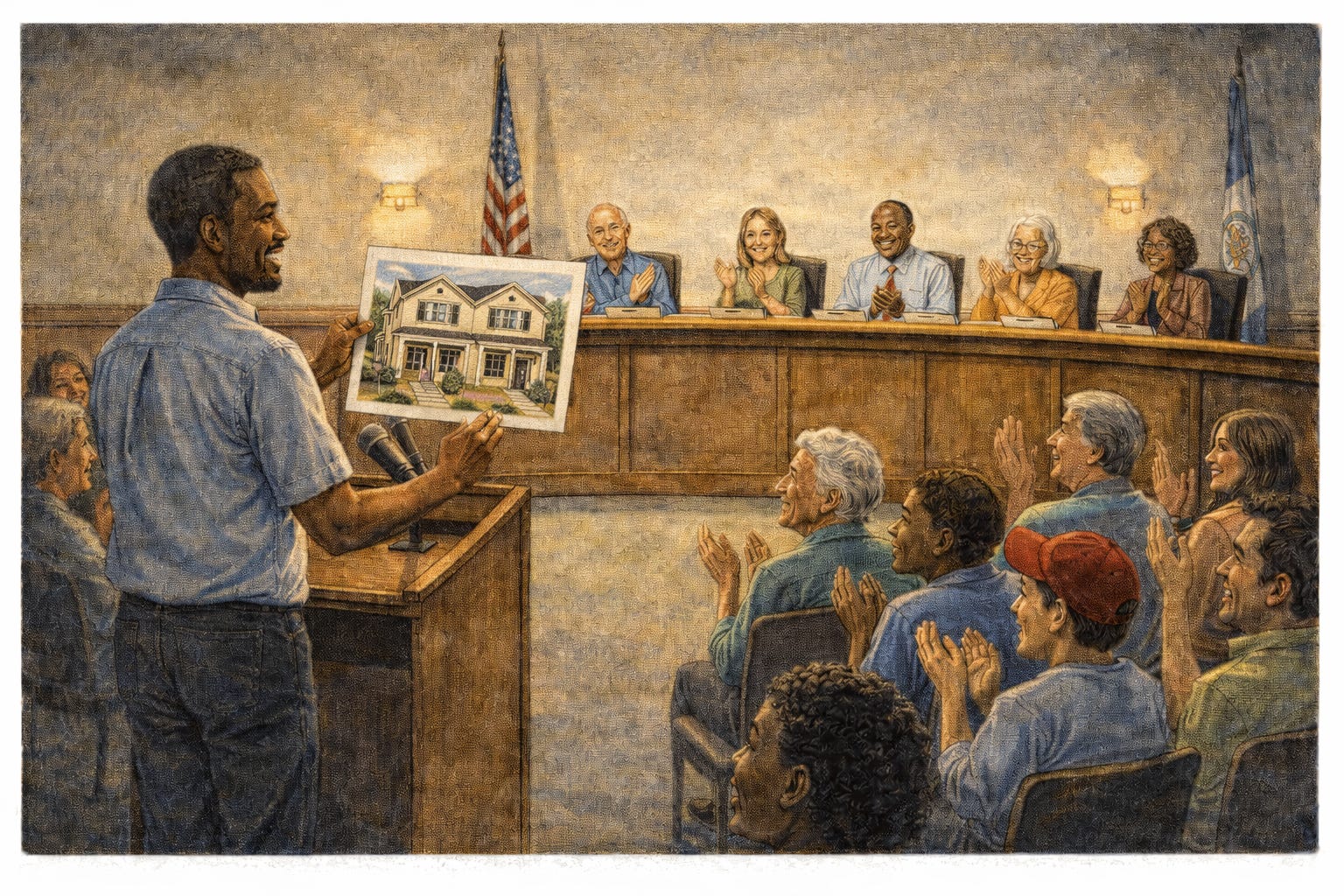
This kind of advocacy is not abstract. It shows up at neighborhood meetings, in conversations with elected officials, and in how people respond when fear-based narratives surface. It means challenging claims that equate density with disorder or assume that renters are less invested than homeowners. It means reminding decision-makers that community strength comes from inclusion, not uniformity.
Perhaps most importantly, everyday people must allow themselves to imagine a future that looks different from the past but still feels rooted. Change does not have to mean erasure. Thoughtful housing can reinforce walkability, support local businesses, strengthen schools, and make neighborhoods more resilient to economic and environmental stress.
The work is not about choosing growth over community. It is about recognizing that, in many cases, thoughtful growth is what allows community to survive at all.
Housing that enhances community asks us to move beyond fear, beyond habit, and beyond the illusion that doing nothing is the same as protecting what we love. It asks us to be honest, engaged, and willing to participate in shaping the places we share, rather than quietly accepting systems that no longer serve us or the generations that will come after.
Closing the Distance
The distance between neighbors is not inevitable. It is the result of choices; some deliberate, many inherited, and most left unexamined. Housing policy did not just shape where we live; it shaped how often we cross paths, how easily we relate, and how willing we are to share space with difference.
Closing that distance does not require abandoning what makes a place feel like home. It requires recognizing that community is not preserved by isolation. It is sustained through connection. Through proximity. Through a willingness to let places grow in ways that reflect real lives rather than idealized fears.
If we want neighborhoods that are truly strong, places where people look out for one another, where opportunity is shared, where belonging is not conditional, then our housing must make room for that vision. Not someday. Not abstractly. But here, in the spaces between us, where community either takes root or quietly fades.